
Why does my steering wheel shake at speed
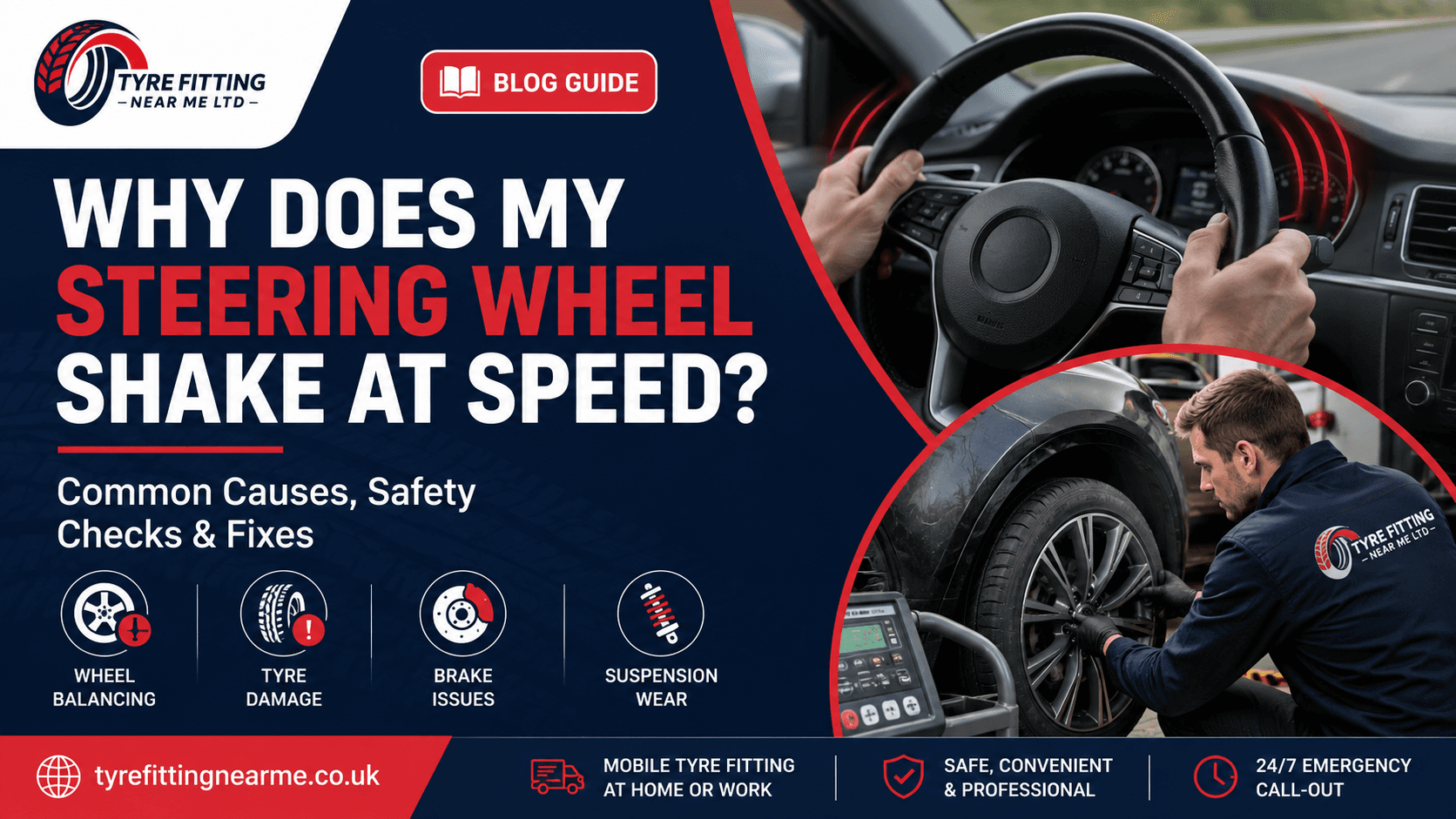
A steering wheel usually shakes at speed because one or more front wheels or tyres are out of balance. The vibration often appears around 55 to 70 mph because rotating wheel imbalance becomes stronger as speed increases. Damaged tyres, bent wheels, brake disc problems, worn steering parts, suspension wear, wheel bearings, or axle faults can also cause steering-wheel vibration.
Drivers should treat steering-wheel shaking as a tyre, wheel, brake, steering, or suspension warning rather than a normal driving issue. A small vibration may need simple wheel balancing, but sudden shaking, brake judder, a tyre bulge, or loose steering needs urgent inspection before motorway driving.
Why does my steering wheel shake at speed?
A steering wheel shakes at speed when a rotating part sends vibration through the front wheels, suspension, steering linkage, or brake system. Wheel and tyre imbalance remains the most common first check because speed increases the force created by uneven tyre weight, missing wheel weights, or a damaged wheel.
Common causes of steering wheel vibration
Unbalanced front tyres
Missing or moved wheel weights
Bent alloy wheels or damaged rims
Uneven tyre wear or tyre flat spots
Low tyre pressure across one axle
Warped or uneven front brake discs
Worn tie rods, ball joints, bushes, or wheel bearings
CV joint or axle faults during acceleration
A mobile technician can inspect the tyre, wheel, and balance condition at your home, workplace, or roadside location. Book wheel balancing for steering wheel vibration when the shake appears mainly at motorway speed.
Why does the shake get worse at higher speed?
Higher speed makes wheel imbalance easier to feel because the tyre and wheel assembly rotates more times per second. A small heavy spot on the wheel can create repeated vibration, and the steering column transfers that movement to the driver’s hands.
What should I check first when my steering wheel shakes?
A driver should first check tyre pressure, visible tyre damage, wheel nuts, tread wear, and the exact speed where the vibration starts. These checks help separate a minor balancing issue from an unsafe tyre, loose wheel, brake fault, or suspension problem.
Quick safety checks before driving further
Check What to look for What it may mean Best action Tyre pressure One tyre looks softer than the others Uneven load or slow pressure loss Inflate tyres and inspect for damage Tyre sidewall Bulge, cut, crack, or exposed cord Structural tyre damage Stop driving at speed and arrange help Wheel nuts Recent tyre or brake work followed by shaking Possible loose wheel hardware Ask a technician to check wheel torque Tread wear Cupping, one-sided wear, or flat spots Balance, alignment, tyre, or suspension issue Book a tyre health inspection
A visible tyre issue needs a professional check before long journeys. Use the free mobile tyre health check when you need tread, sidewall, pressure, valve, and wear-pattern inspection.
Can a slow puncture cause steering vibration?
A slow puncture can cause steering vibration when one tyre loses pressure and changes shape on the road. A tyre with low pressure can create uneven steering feedback, poor handling, and extra heat during motorway driving.
Read slow puncture causes and safe checks if the tyre pressure warning light appears or one tyre keeps losing air.
Why does my steering wheel shake at 60 to 70 mph?
A steering wheel that shakes at 60 to 70 mph usually points to unbalanced front tyres, missing wheel weights, bent wheels, tyre damage, or wheel runout. This speed range commonly exposes wheel imbalance because rotational force increases with road speed.
Can unbalanced tyres cause steering wheel shake at 60 mph?
Unbalanced tyres can cause steering-wheel shake at 60 mph because uneven weight around the wheel creates repeated vibration. The vibration usually feels strongest through the steering wheel when the imbalance affects the front wheels.
Can a bent wheel cause shaking at 70 mph?
A bent wheel can cause shaking at 70 mph because the tyre no longer rotates in a clean circular path. Potholes and kerbs can bend rims, damage sidewalls, move wheel weights, or affect alignment.
Front wheel imbalance vs rear wheel imbalance
Where you feel vibration Likely area Common cause First check Steering wheel Front wheels or tyres Imbalance, tyre damage, bent rim Front wheel balance check Seat or floor Rear wheels or tyres Rear imbalance or tyre deformation All-wheel balance check Brake pedal and steering wheel Front brakes Brake disc runout or pad issue Brake inspection
Why does my steering wheel shake when braking?
A steering wheel shakes when braking because the brake system can send uneven force through the front wheels and steering linkage. Front brake disc runout, uneven brake discs, worn pads, sticking calipers, or suspension play can create brake judder.
Can brake discs cause steering wheel vibration?
Brake discs can cause steering-wheel vibration when the disc surface becomes uneven and the brake pads press against it during braking. The shake often feels stronger when slowing down from higher speed.
What does brake pedal pulsation mean?
Brake pedal pulsation usually means the braking force changes during wheel rotation. A driver who feels pedal pulsation and steering-wheel shake should arrange brake inspection before booking alignment.
A mobile tyre technician can still inspect tyres and visible wheel condition when braking vibration starts after a tyre issue. Choose mobile tyre repair at home or roadside when a puncture, pressure loss, or visible tyre problem appears with the vibration.
Why does my steering wheel shake after a nail, screw or puncture?
A steering wheel can shake after a nail, screw, or puncture because the tyre may lose pressure, deform, or suffer internal damage. A puncture repair only remains safe when the damage sits inside the repairable tread area and the tyre has no sidewall or internal structural damage.
Can a nail in the tyre cause vibration?
A nail in the tyre can cause vibration when the puncture creates slow pressure loss or damages the tyre structure. A driver should avoid motorway speed when the tyre loses pressure repeatedly or the steering feels unstable.
Read what to do with a nail or screw in your tyre before deciding whether to drive, repair, or replace the tyre.
Can a puncture repair fix steering vibration?
A puncture repair can fix steering vibration only when the vibration came from pressure loss and the tyre remains safely repairable. A damaged sidewall, run-flat damage, or internal tyre fault usually needs replacement rather than repair.
Check puncture repair cost in the UK if you need a repair-price guide before booking a mobile technician.
Can wheel alignment cause steering wheel shaking?
Wheel alignment can contribute to vibration indirectly, but wheel balancing usually causes speed-related steering shake more directly. Alignment changes wheel angles and commonly causes pulling, off-centre steering, or uneven tyre wear rather than pure vibration.
Wheel balancing vs wheel alignment
Service What it corrects Main symptom Best use case Wheel balancing Uneven rotating weight Vibration at speed Steering wheel shakes at 60 to 70 mph Wheel alignment Wheel angle and geometry Pulling or uneven tyre wear Car drifts or tyres wear on one side Tyre inspection Tread, pressure, sidewall, and damage Unsafe tyre symptoms Bulges, cuts, punctures, or pressure loss
When should I choose wheel balancing?
A driver should choose wheel balancing when the main symptom is vibration at motorway speed. A driver should choose alignment when the vehicle pulls left or right, the steering wheel sits off-centre, or tyres show uneven wear.
Why does my steering wheel shake after new tyres or rotation?
A steering wheel can shake after new tyres, tyre rotation, or balancing when the wheel balance is incorrect, the wheel is poorly mounted, wheel weights are missing, or a tyre has force variation. Recent service history gives a strong clue because the symptom started after a known tyre or wheel change.
Can incorrect balancing cause vibration after new tyres?
Incorrect balancing can cause vibration after new tyres because every new tyre changes the weight distribution of the wheel assembly. A second balance check should come before replacing brakes, suspension, or steering parts.
What should the tyre fitter recheck?
The tyre fitter should recheck the balance on all four wheels.
The tyre fitter should check wheel weights and mounting surfaces.
The tyre fitter should inspect tyre pressure against the vehicle handbook.
The tyre fitter should check rim runout and visible tyre shape.
The tyre fitter should road test the vehicle after correction.
Read how mobile tyre fitting works if the vibration starts after fitting and you want a technician to return to your home, workplace, or roadside location.
Why does my steering wheel still shake after balancing?
A steering wheel can still shake after balancing when the tyre has road-force variation, wheel runout, internal belt damage, hub runout, or suspension play. Standard balancing corrects uneven weight, but it cannot always correct tyre stiffness variation or wheel shape faults.
Can tyre damage remain after normal balancing?
Tyre damage can remain after normal balancing because a tyre may have internal belt damage, sidewall weakness, or an uneven casing. A balance machine may correct weight while the tyre still rolls unevenly under load.
When should the mechanic inspect suspension and bearings?
A mechanic should inspect suspension and bearings when the vibration continues after balancing or comes with humming, clunking, steering play, or uneven tyre wear. A worn bearing or loose ball joint cannot be fixed by adding wheel weights.
Is it safe to drive with a shaking steering wheel?
A shaking steering wheel can be unsafe when the cause involves tyre damage, loose wheel nuts, brake judder, steering play, suspension looseness, or wheel-bearing failure. A mild imbalance may allow a short local trip to a garage, but severe shaking should stop the journey.
Safety levels for steering wheel vibration
Severity Symptom Risk Action Mild Small vibration at 60 to 70 mph Likely balance issue Book wheel balancing soon Moderate Vibration with pulling or uneven tyre wear Tyre, alignment, or suspension issue Avoid long journeys and arrange inspection Severe Sudden shake, tyre bulge, brake judder, or loose wheel feel Loss of control or tyre failure risk Stop safely and call for assistance
Use 24/7 emergency mobile tyre fitting when a tyre fault, pressure loss, or unsafe wheel condition stops your journey.
Can I drive on the motorway with steering vibration?
A driver should avoid motorway driving when steering vibration is severe, sudden, or linked with tyre damage, brake judder, or loose steering. A long motorway journey adds heat, speed, and distance to an existing fault.
Read can you drive on a flat tyre if the steering shake appears with pressure loss or a visibly soft tyre.
How do mechanics diagnose and fix steering wheel shaking?
Mechanics diagnose steering-wheel shaking by road-testing the vehicle, recording speed and driving condition, inspecting tyres and wheels, checking balance, measuring wheel runout, inspecting brakes, checking bearings, and testing suspension play. The correct fix depends on the confirmed cause, not the broad symptom.
Inspection order for steering vibration
The technician road-tests the vehicle and records the speed where vibration starts.
The technician checks tyre pressure, tread wear, sidewalls, and visible damage.
The technician checks wheel balance and missing wheel weights.
The technician inspects bent rims, wheel runout, and hub contact.
The technician checks alignment when pulling or uneven tyre wear appears.
The technician inspects brake discs, pads, and calipers when shaking happens during braking.
The technician checks wheel bearings, tie rods, ball joints, and control-arm bushes.
The technician checks CV joints or axles when vibration appears under acceleration.
Which repair fixes each cause?
Confirmed cause Test used Correct repair Urgency Unbalanced wheel Wheel balancer Rebalance the wheel and tyre assembly Prompt Damaged tyre Sidewall and tread inspection Replace the unsafe tyre Urgent Punctured tyre Repairable-zone inspection Repair or replace the tyre Prompt Brake disc fault Brake inspection Repair discs, pads, or calipers Urgent when braking is affected Worn suspension part Front-end play check Replace the worn joint, bush, or bearing Urgent when steering feels loose
Which tyre services can help with steering wheel shaking?
Tyre Fitting Near Me Ltd can help when steering-wheel shaking comes from tyre pressure loss, wheel imbalance, puncture damage, run-flat tyre issues, TPMS faults, or unsafe tyre condition. A mobile tyre technician can come to your home, workplace, or roadside location.
Related mobile tyre services
Related tyre guides
Need your steering wheel vibration checked?
Tyre Fitting Near Me Ltd can inspect tyre pressure, tread, sidewalls, punctures, wheel balance, and visible tyre safety issues at your home, workplace, or roadside. Call 0788 328 8831 or book a mobile tyre check today.
FAQs about steering wheel shaking at speed
Is it normal for a steering wheel to shake while driving?
No, a steering wheel should not shake noticeably on a smooth road. A small vibration can come from wheel imbalance, but a strong shake can signal tyre damage, brake problems, steering play, or suspension wear. A driver should record the speed and driving condition before booking inspection.
Why does my steering wheel shake at 70 mph?
A steering wheel that shakes at 70 mph usually points to unbalanced tyres, missing wheel weights, bent wheels, or tyre damage. A technician should check wheel balance first, then inspect tyre shape, rim runout, tyre pressure, and front-end components if balancing does not fix the vibration.
Can low tyre pressure cause steering wheel shaking?
Yes, low tyre pressure can cause steering wheel shaking because the tyre shape and road contact change under load. Uneven pressure across the front axle can create poor steering feedback, extra tyre heat, and unstable handling. A driver should inflate tyres correctly and inspect for leaks.
Can bad brakes cause the steering wheel to shake?
Yes, bad brakes can cause steering-wheel shaking when the vibration appears mainly during braking. Front brake disc runout, uneven brake pads, or sticking calipers can send vibration through the steering system. Brake pedal pulsation supports a brake-related diagnosis.
Can a pothole cause steering wheel shaking?
Yes, a pothole can cause steering-wheel shaking by bending a wheel, damaging a tyre, moving wheel weights, changing alignment, or damaging suspension parts. A vibration that starts after impact needs tyre, rim, alignment, and front-end inspection before high-speed driving.
Should I ask for wheel balancing or wheel alignment?
Ask for wheel balancing when the main symptom is vibration at speed. Ask for wheel alignment when the car pulls, the steering wheel sits off-centre, or tyres wear unevenly. A technician should inspect tyres and wheels first when both symptoms appear together.
Can a puncture make my steering wheel vibrate?
Yes, a puncture can make the steering wheel vibrate when the tyre loses pressure or suffers structural damage. A slow puncture can change the tyre shape, while a sidewall injury can make the tyre unsafe. A repairable-zone inspection should confirm whether repair is possible.
How do I fix steering wheel shaking at high speeds?
Fix steering-wheel shaking at high speeds by diagnosing the cause first. Wheel balancing often fixes speed-related vibration, but damaged tyres, bent wheels, brake faults, bearings, or suspension wear need different repairs. A road test after repair should confirm the vibration has gone.
Why does my steering wheel shake then go away?
A steering wheel can shake then go away when vibration appears only in a specific speed band. Wheel imbalance, tyre force variation, road surface, and wheel resonance can make vibration strongest at one speed and weaker above or below that range.