
New valves with every fitting
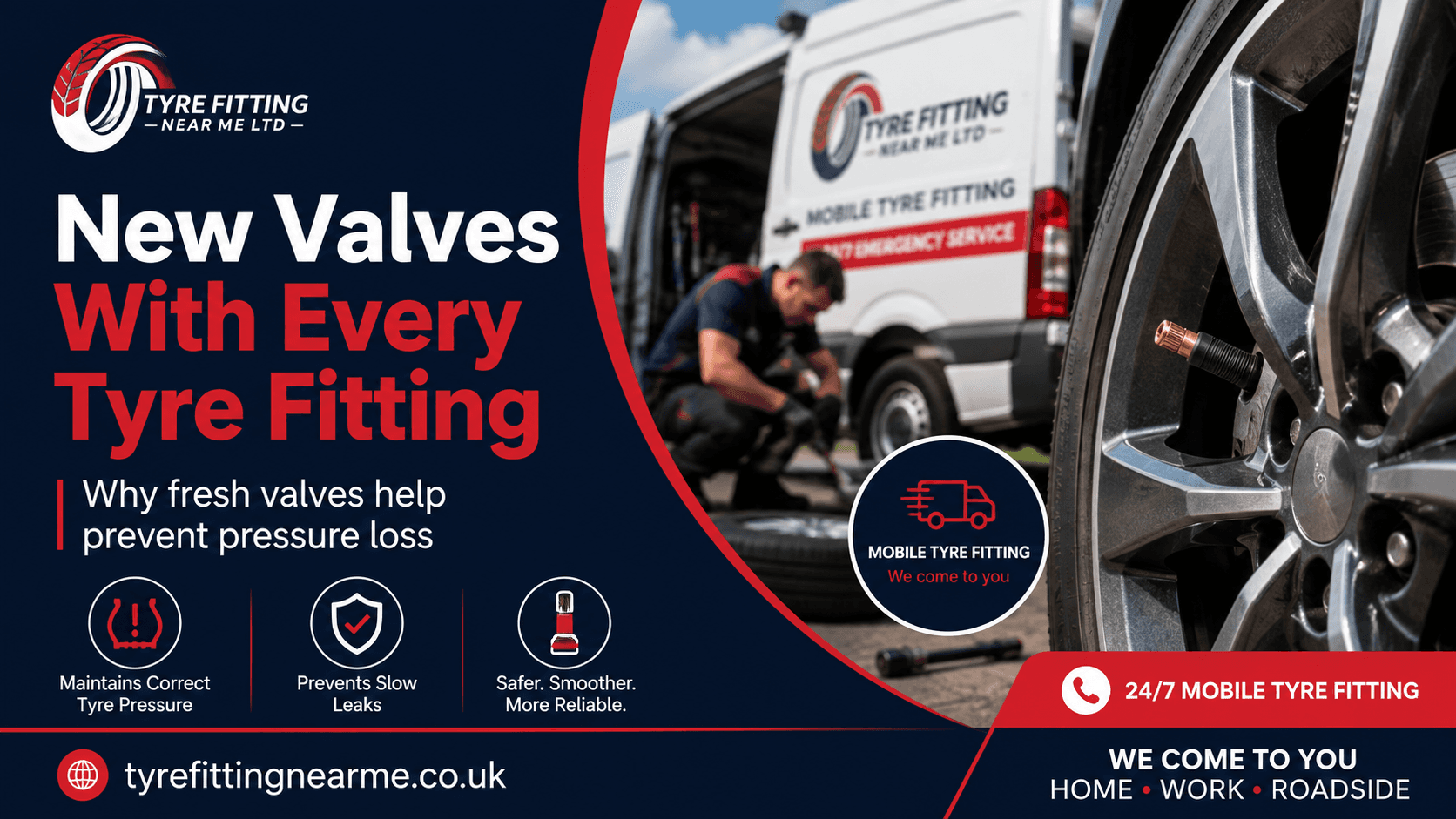
New valves with every tyre fitting help prevent slow tyre pressure loss because old rubber valves can harden, crack, leak, or fail after the tyre is removed. A mobile tyre fitter replaces the valve, checks the rim seal, inflates the tyre, and confirms the wheel assembly holds pressure safely.
The guide explains tyre valves, valve caps, TPMS valve stems, rim seals, pressure loss, puncture diagnosis, and mobile tyre fitting. Drivers use the page when a tyre loses air, a pressure warning appears, or a new tyre fitting includes a valve item in the quote. The article links each problem to one relevant service or guide, with no repeated internal URL.
Do You Get New Valves With Every Tyre Fitting?
Drivers usually get a new rubber tyre valve when a new tyre is fitted because the valve stem forms part of the air-sealing assembly. The old valve may have been bent, stretched, heat aged, or disturbed during tyre removal. A fresh valve and cap reduce avoidable pressure loss, while TPMS-equipped wheels may need a service kit instead of a basic rubber valve.
What does “new valve” mean during tyre fitting?
A new tyre valve means the small valve stem assembly that lets the tyre receive and hold compressed air. The assembly usually includes the rubber valve stem, valve core, and protective valve cap on standard wheels. TPMS-equipped wheels may use a metal valve stem, sealing washer, nut, cap, and sensor-linked parts. A trained fitter should confirm the correct valve type before fitting.
Why does the old valve get changed when the tyre comes off?
The old valve gets changed because tyre removal places stress around the valve hole, bead area, and wheel rim. Rubber valves also age through heat cycles, pressure changes, road salt, and movement during everyday driving. A fitter can replace a low-cost rubber valve during tyre fitting more efficiently than returning later for a slow leak. The next section explains the pressure-retention reason behind that practice.
Why Should a New Tyre Valve Be Fitted With a New Tyre?
A new tyre valve should be fitted with a new tyre because the valve controls air retention at the wheel rim, not just inflation access. Rubber valve stems age under heat, ozone, road salt, bending, and pressure cycles. A new valve gives the fresh tyre a cleaner sealing point, while the fitter can inspect the rim before inflation and balancing.
How can old rubber valves cause slow pressure loss?
Old rubber valves can cause slow pressure loss when the stem hardens, cracks, bends, or loses sealing pressure against the wheel rim. Valve cores can also collect grit when caps are missing, and contamination can stop the core from closing cleanly. Drivers usually notice repeated top-ups, uneven tyre pressure readings, or a dashboard warning on TPMS-equipped cars. Drivers with repeat air loss can compare valve faults with slow puncture causes and pressure-loss symptoms.
How does a new valve support safer tyre pressure?
A new valve supports safer tyre pressure by giving the tyre assembly a fresh air-sealing point during fitting. Correct tyre pressure helps the tyre maintain its intended contact patch, tread wear pattern, and load-carrying behaviour. GOV.UK states that tyres must have the correct tread depth and must be free of cuts and defects when a vehicle is used on the road.
New rubber valves reduce avoidable valve-stem leak risk after tyre fitting.
New valve caps protect the valve core from dirt, water, and road grit.
TPMS valve service kits help renew seals around sensor-equipped valves.
Rim inspection helps separate valve leaks from bead leaks and rim corrosion.
What Is the Difference Between a Rubber Valve and a TPMS Valve?
A rubber tyre valve is a simple snap-in valve stem that seals the wheel and allows inflation. A TPMS valve connects to a tyre pressure monitoring sensor, so the stem, seal, nut, and cap may need a vehicle-specific service approach. Standard tyre fitting normally replaces rubber valves, while TPMS work may replace the service kit or the complete sensor assembly.
When is a standard rubber snap-in valve used?
A standard rubber snap-in valve is used on many wheels without a direct TPMS sensor attached to the valve stem. The valve seals through rubber compression against the valve hole in the wheel rim. A fitter normally removes the old stem and installs a new stem when the tyre is changed. The comparison table below separates rubber valve service from TPMS valve service.
When does a TPMS valve need a different service approach?
A TPMS valve needs a different service approach when the valve stem connects to a tyre pressure monitoring sensor inside the wheel. GOV.UK says cars first used on or after 1 January 2012 have the TPMS malfunction indicator lamp checked during MOT inspection. A fitter should protect the sensor, renew correct sealing parts, and confirm the warning system after inflation. Drivers with a dashboard warning can book TPMS sensor diagnosis and valve service.
Valve Type Where It Is Used What Usually Gets Replaced Key Risk Fitter Action Rubber snap-in valve Wheels without a direct valve-mounted TPMS sensor Complete rubber valve stem, valve core, and cap Cracked rubber stem or weak rim seal Fit a new rubber valve during tyre fitting Metal clamp-in valve Some alloy wheels and sensor-equipped assemblies Seal, washer, nut, valve core, and cap Corrosion, seal compression loss, or seized cap Renew service parts and tighten to specification TPMS valve Wheels with a tyre pressure monitoring sensor Service kit or complete sensor assembly when needed Sensor damage, air leak, or warning lamp issue Use vehicle-specific parts and verify TPMS function
Drivers comparing valve types should avoid treating every valve as the same part. Rubber valves support basic air sealing, while TPMS valves support both air sealing and pressure monitoring. A service kit can renew seals without replacing a working sensor when the sensor remains serviceable. The next section explains how valve issues appear as pressure-loss symptoms.
Can an Old Tyre Valve Cause Pressure Loss After Fitting?
An old tyre valve can cause pressure loss after fitting when the stem seal, valve core, TPMS seal, or valve hole area fails to hold air. A driver may notice repeated inflation, a dashboard pressure warning, or bubbles around the valve during a leak test. A fitter should check the valve, bead, rim, tread, and sidewall before deciding the repair.
What are the signs of a leaking tyre valve?
A leaking tyre valve usually shows a slow pressure drop rather than an instant flat tyre. A driver may hear a faint hiss, see bubbles during a soapy-water test, or receive repeated TPMS warnings after inflation. The leak may come from the valve core, rubber stem, TPMS washer, or the valve hole in the rim. A fitter should test the valve before assuming a puncture caused the loss.
What else can look like a valve leak?
A puncture, bead leak, rim corrosion, sidewall cut, or cracked wheel can look like a valve leak because each fault can release air gradually. Tread punctures often show a nail, screw, or embedded object, while bead leaks usually appear where the tyre edge meets the rim. Sidewall damage changes the safety decision because professional repair rules restrict repairable damage areas. The diagnosis table below prevents that confusion.
Symptom Likely Valve Issue What the Fitter Checks Likely Action Pressure drops after every top-up Valve core leak or weak stem seal Valve core, stem base, and cap condition Replace valve or valve service kit Bubbles appear around valve base Stem seal leak at wheel rim Valve hole, rim surface, and rubber stem Fit new valve and inspect rim corrosion TPMS warning returns after inflation TPMS seal leak or pressure sensor issue TPMS stem, seal, nut, and warning lamp Renew TPMS service kit or diagnose sensor Tyre loses air after a pothole impact Valve movement or rim damage may exist Rim edge, bead seal, sidewall, and valve Diagnose wheel and tyre before repair approval
Pressure-loss diagnosis needs full wheel inspection because the valve forms only one part of the air-retention system. A mobile fitter can test the valve area and then inspect tread, bead, rim, and sidewall damage. Drivers who want a wider on-site check can use a free tyre health check for tread, pressure, valve, age, and wear pattern. The next section explains the smaller valve cap component.
Are Valve Caps Important After a New Tyre Fitting?
Valve caps protect the valve core from dirt, water, road salt, and grit after a new tyre fitting. A missing cap does not normally seal the tyre by itself, but contamination can stop the valve core closing cleanly. Plastic caps suit many everyday wheels, while metal caps need care because corrosion or overtightening can make removal difficult during future servicing.
What does a tyre valve cap actually protect?
A tyre valve cap protects the valve core from road contamination after tyre fitting. Dirt, water, salt, and grit can collect around an exposed valve core and make inflation or pressure checking less reliable. A cap also reduces the chance of contamination entering the valve when a driver checks pressure. Drivers should replace missing caps before small contamination problems become leak-diagnosis problems.
Should drivers choose plastic caps or metal valve caps?
Drivers should choose valve caps that match the valve type and service conditions. Plastic caps suit many standard rubber valves because they protect the core without creating corrosion concerns. Metal valve caps can look stronger, but unsuitable metal caps may seize on metal stems when corrosion forms. A fitter should remove seized caps carefully before valve or pressure testing.
Cap Type Main Purpose Benefit Caution Plastic valve cap Protects the valve core from dirt and moisture Simple, light, and suitable for many everyday valves Low-quality caps may crack or loosen over time Metal valve cap Protects the core and changes wheel appearance Durable feel and neat finish on suitable valves Wrong metal pairing can seize on the stem Sealing valve cap Adds extra protection over the valve core Helps protect against contamination around the core Cannot replace a faulty valve core or leaking stem
How Does a Mobile Tyre Fitter Replace a Tyre Valve?
A mobile tyre fitter replaces a tyre valve by safely preparing the vehicle, removing the wheel when required, breaking the tyre bead, removing the old valve, fitting the correct new valve, and checking the wheel assembly for air loss. The fitter then inflates the tyre to the correct pressure, checks the valve area, and balances the wheel where needed before handover.
What happens before the new valve is installed?
The fitter prepares the vehicle before valve installation because safe access controls the whole mobile tyre fitting process. The fitter parks safely, checks the wheel position, confirms the tyre size, and inspects visible damage. The tyre is deflated before the bead is moved away from the rim. The old valve is removed after the wheel and tyre position allow safe access.
What checks happen after the new valve is installed?
The fitter checks the new valve after installation because air loss can still come from the bead, rim, or tyre casing. The fitter inflates the tyre, checks the valve base, tests the bead area, and sets pressure according to the vehicle requirement. Wheel balancing may follow tyre fitting because a new tyre changes wheel-and-tyre mass distribution. Drivers can read how mobile tyre fitting works from booking to final checks before the appointment.
The fitter positions the vehicle in a safe working location.
The fitter confirms tyre size, valve type, and TPMS status.
The fitter removes the wheel when the job requires wheel-off access.
The fitter deflates the tyre and breaks the bead from the rim.
The fitter removes the old valve stem or TPMS service parts.
The fitter cleans the valve hole and checks rim condition.
The fitter installs the correct new valve or TPMS service kit.
The fitter inflates the tyre and checks for leaks.
The fitter balances the wheel where tyre fitting requires balancing.
The fitter confirms pressure and returns the vehicle for use.
Is the Problem a Valve Leak, Puncture, Bead Leak, or Rim Issue?
A pressure problem can come from a valve leak, tread puncture, bead leak, rim corrosion, TPMS seal, or tyre damage. A new valve only fixes air loss caused by the valve assembly. A fitter must inspect the full tyre and wheel because TyreSafe says car tyre repairs must follow British Standard AU159 and professional inspection rules before repair approval on road vehicles.
How does a fitter diagnose the source of air loss?
A fitter diagnoses air loss by testing every common leak path before approving a repair. The fitter checks the valve core, valve base, tyre tread, bead seating area, rim edge, and sidewall. A bubble test can show air escaping from the valve or bead, while a tread inspection can find screws, nails, or cuts. Drivers with visible metal in the tread can read nail or screw in tyre repair advice before booking.
When does the tyre need repair or replacement instead of a valve?
The tyre needs repair or replacement instead of a valve when the air loss comes from tread injury, shoulder damage, sidewall damage, bead damage, or structural tyre failure. TyreSafe states that puncture repairs must be carried out by a tyre specialist and in line with British Standard AU159. Drivers comparing tread, shoulder, and sidewall damage can use repairable vs non-repairable puncture guidance before expecting a repair.
Air-Loss Source Common Sign Repairability Fitter Action Valve leak Bubbles around valve core or valve base Often serviceable with correct valve parts Replace rubber valve or TPMS service kit Tread puncture Nail, screw, or object in tread area Repair depends on damage position and tyre condition Inspect internally and repair only under safe rules Bead leak Bubbles where tyre edge meets wheel rim Repair depends on rim and bead condition Clean rim seat, reseat tyre, or advise replacement Rim corrosion Air loss near corroded rim surface Repair depends on rim damage severity Inspect rim, clean sealing face, or recommend wheel repair Sidewall damage Cut, bulge, tear, or impact mark on sidewall Usually unsafe for standard puncture repair Recommend tyre replacement after inspection
Does a New Valve Replace the Need for Puncture Repair or Wheel Balancing?
A new valve does not replace puncture repair or wheel balancing because each service solves a different tyre problem. A valve seals the inflation point, puncture repair seals a safe tread-area injury, and wheel balancing corrects weight distribution after tyre fitting. A fitter should diagnose the actual cause before recommending valve replacement, puncture repair, balancing, or tyre replacement for the driver.
When is puncture repair still needed?
Puncture repair is still needed when a repairable tread-area injury causes air loss. A new valve cannot seal a nail hole, screw penetration, or internal casing injury. TyreSafe says puncture repairs must only be carried out by a tyre specialist under the current British Standard AU159. Drivers with a repairable central tread injury can book mobile tyre repair for BS AU 159 puncture assessment.
When is wheel balancing still needed?
Wheel balancing is still needed when a new tyre changes weight distribution around the wheel assembly. A new valve solves an air-sealing point, while balancing addresses vibration, uneven rotation, and steering feedback after fitting. The fitter should balance the wheel when tyre fitting equipment and job scope require it. Drivers with steering shake can book mobile wheel balancing for vibration and uneven tyre wear.
Issue Does a New Valve Fix It? Required Service Leaking rubber valve stem Yes, when the valve assembly causes the leak Tyre valve replacement TPMS seal leak Sometimes, when service kit parts cause the leak TPMS service kit or sensor diagnosis Tread puncture No, because the tyre casing has damage Puncture inspection and approved repair Wheel vibration after fitting No, because vibration relates to balance Wheel balancing Rim corrosion leak No, unless valve area corrosion causes the leak Rim inspection and sealing-face correction
When Should You Book Mobile Tyre Fitting for a Valve or Pressure Problem?
Drivers should book mobile tyre fitting when a tyre keeps losing pressure, a tyre pressure warning returns, a valve looks cracked, or a flat tyre prevents safe travel. A mobile fitter can attend a home, workplace, or safe parking location. Motorway hard shoulders and live lanes require breakdown safety decisions before any tyre service attempt near moving traffic by professionals.
When is a mobile tyre fitter the right option?
A mobile tyre fitter is the right option when the vehicle can be reached safely at home, work, or another secure parking location. The fitter can replace tyres, fit new rubber valves, inspect TPMS valve parts, diagnose pressure loss, and check the wheel assembly. Drivers with a flat tyre can choose 24/7 emergency tyre fitting for flats and blowouts when the vehicle cannot be driven safely.
When should roadside fitting be avoided for safety?
Roadside fitting should be avoided when live traffic, motorway lanes, hard shoulders, poor visibility, or unsafe parking creates risk. The Highway Code says drivers should try to stop in a place of relative safety during a breakdown, and hard shoulders provide less protection because they sit close to high-speed traffic. Drivers unsure after a deflation event can read flat tyre driving safety guidance before moving the vehicle.
Book Mobile Tyre Fitting With New Valve Replacement
Our mobile tyre fitting process includes tyre inspection, correct valve selection, pressure setting, and leak checks at a safe location. Drivers with pressure loss, TPMS warnings, or worn tyres can book mobile tyre fitting with new valve replacement today.
What Questions Do Drivers Ask About New Tyre Valves With Every Fitting?
Drivers ask new tyre valve questions because pressure loss can come from the valve, tyre, wheel rim, puncture, or TPMS system. The answers below explain what gets replaced, when reuse makes poor service sense, and when a mobile fitter should inspect the full wheel assembly before approving a valve change, puncture repair, or tyre replacement for safe road use after diagnosis.
Do you need a new valve with every new tyre?
Yes, a new rubber valve is normally fitted with a new tyre. The valve forms part of the tyre and wheel air-sealing assembly, so replacing it during tyre fitting reduces avoidable slow pressure loss. TPMS-equipped wheels may need a service kit rather than a basic rubber valve. A fitter should confirm the correct valve type before inflation.
Is a tyre valve included with mobile tyre fitting?
A tyre valve is often included with standard mobile tyre fitting. The exact inclusion depends on the fitter, tyre package, vehicle, wheel type, and TPMS setup. Standard rubber valves are usually straightforward parts, while TPMS valve service kits can carry a separate cost. Drivers should confirm valve inclusion before booking the appointment.
Can I reuse an old tyre valve?
A driver can physically reuse some old valves, but reuse is usually poor service practice for standard rubber valves. The old valve may have hardened, cracked, stretched, or lost sealing pressure at the rim. A new rubber valve costs less than a return visit for a slow leak. TPMS valves require inspection before reuse or service-kit replacement.
Are TPMS valves replaced every time?
TPMS valves are not always fully replaced every time a tyre is fitted. A fitter may replace the seal, washer, nut, valve core, and cap through a TPMS service kit when the sensor still works. A complete TPMS sensor replacement becomes relevant when the sensor fails, the stem is damaged, or the system cannot report pressure correctly.
Can a valve cap stop a tyre leak?
A valve cap cannot properly fix a leaking tyre valve. The cap protects the valve core from dirt, water, grit, and road salt, but the valve core and stem provide the actual air seal. A sealing cap may reduce contamination risk, yet a faulty core, cracked stem, or TPMS seal still needs proper diagnosis and replacement.
How do fitters check a tyre valve leak?
Fitters check a tyre valve leak by testing the valve core, valve base, and rim area for escaping air. A bubble test can reveal air loss around the valve after inflation. The fitter should also inspect the tread, bead, sidewall, rim surface, and TPMS seal because several faults can mimic a valve leak.
Can a leaking tyre valve fail an MOT?
A leaking tyre valve can contribute to unsafe tyre condition, but MOT assessment uses the official tyre and TPMS inspection criteria. GOV.UK states that MOT checks include wheels, tyres, tyre condition, and TPMS rules for relevant vehicles. A driver should treat visible tyre damage, underinflation, and warning lights as inspection triggers before relying on the vehicle.
Can mobile tyre fitters repair punctures too?
Mobile tyre fitters can repair some punctures when the tyre damage meets safe repair conditions. TyreSafe says car tyre repairs must be carried out by a tyre specialist and in accordance with British Standard AU159. Drivers who already had a plug-patch can read how long a puncture repair lasts after inspection before judging repair lifespan.
Why is my tyre still losing air after a new valve?
A tyre can still lose air after a new valve when another fault exists in the tyre or wheel assembly. The source may be a tread puncture, bead leak, rim corrosion, cracked wheel, TPMS seal, or sidewall damage. A fitter should retest the complete assembly and avoid replacing extra parts without confirming the leak source.